
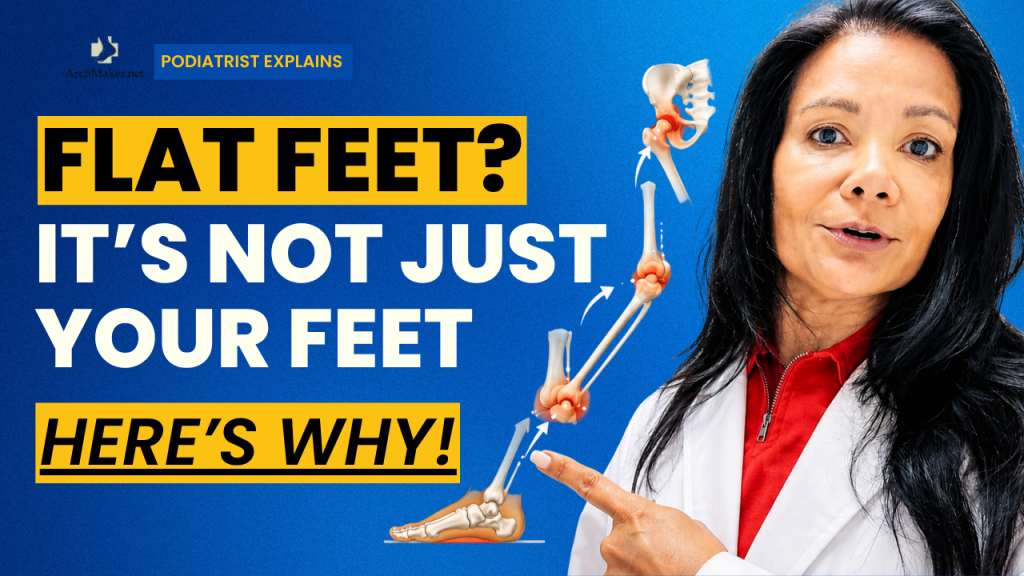
If you have recurring arch, ankle, knee, or even hip pain, the problem may be starting lower than you think. Flat feet treatment isn’t only about relieving sore feet. Because your feet form the foundation of the way you walk, a flattened arch can affect your gait and potentially influence the way your ankles, knees, and hips move.
What Does It Mean to Have Flat Feet?
There are generally three arch types: high, medium, and low or flat arches.
With an efficient walking pattern, you move from your heel through your midfoot and eventually push off through the front of your foot. This helps distribute forces across the foot as you walk.
With flat feet, the arch is lower or flattened. According to Dr. Po Raval, this can reduce the foot’s ability to manage shock efficiently and contribute to arch discomfort.
But the effects may not stop at your feet.
Why Flat Feet Can Affect Your Entire Lower Body
Your feet are connected to the way the rest of your body moves.
As a flat foot changes position, the ankle can rotate with it. That change can influence the knee and hip as you walk.
This is why someone with flat feet may experience:
- Arch pain
- Ankle discomfort
- Knee pain
- Hip pain
- Changes in walking mechanics
If you’re treating knee or hip discomfort without considering what’s happening at your feet, you may be overlooking an important part of the picture.
Flat Feet Treatment: Why Addressing Your Arch Matters
Over time, Dr. Raval explains that flat feet can place additional stress on the arch and plantar fascia. This may contribute to tightness and conditions such as plantar fasciitis.
The continued pulling can also affect the heel and potentially contribute to additional discomfort as your walking pattern changes.
That’s why Dr. Raval recommends looking from the foot up when evaluating these problems.
Depending on the individual, flat feet treatment may include supportive insoles, a consistent stretching program, and physical therapy when needed.
Children also naturally begin with flatter-looking feet as they learn to walk. Dr. Raval recommends paying attention to how their arches develop as they grow.
Start With Your Foundation
If you’re experiencing recurring foot, ankle, knee, or hip pain, don’t overlook your arches.
Understanding your foot type and how it affects the way you walk can help you make better decisions about footwear, support, stretching, and treatment.
Visit Archmaker.net for more expert tips from Dr. Po Raval on improving foot health, mobility, and the way you walk.